
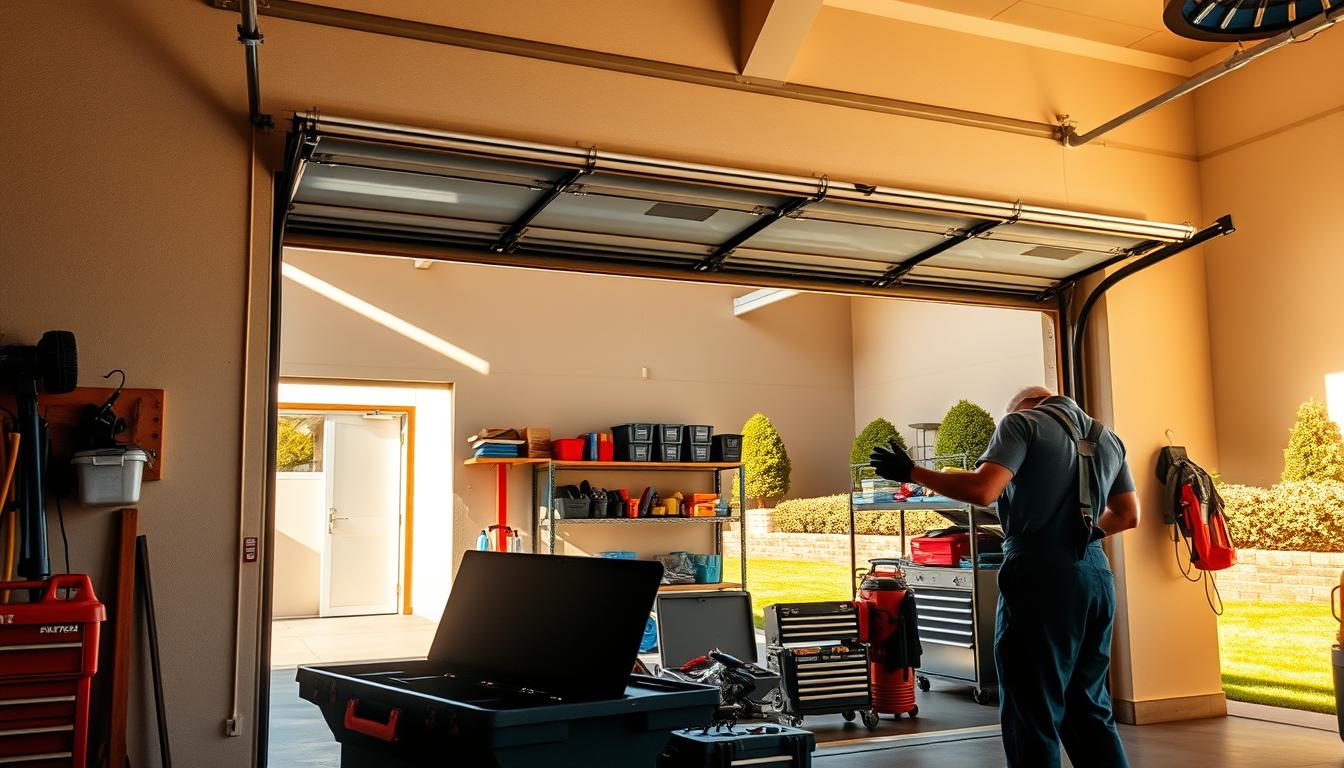
Maintaining a functional garage door is crucial for homeowners in the United States. A malfunctioning door can lead to security issues, inconvenience, and increased energy bills. Understanding the basics of garage door repair can help you identify common problems and perform DIY fixes.

Garage Door Fixing
Common issues with garage doors include faulty openers, broken springs, and misaligned tracks. By learning simple garage door maintenance techniques, you can prevent these problems and extend the lifespan of your door.
Key Takeaways
- Regular maintenance can prevent common garage door problems.
- DIY repairs can save you money and inconvenience.
- Understanding garage door mechanics is essential for effective repair.
- Identifying the right tools is crucial for successful DIY fixing.
- Troubleshooting techniques can help resolve garage door opener issues.
Understanding Common Garage Door Problems
Understanding the common problems that affect garage doors is crucial for maintaining their functionality and longevity. Garage doors are complex systems with many moving parts, and identifying issues early can prevent minor problems from becoming major repairs.
Signs Your Garage Door Needs Repair
Recognizing the signs that your garage door needs repair is the first step in addressing potential issues. Some common indicators include unusual noises, vibrations, and difficulties in opening or closing the door.
Most Frequent Garage Door Issues
Garage doors can experience a variety of problems, but some issues are more common than others. These include noise and vibration problems, as well as difficulties with opening and closing.
Noise and Vibration Problems
Noise and vibration during garage door operation can be caused by worn-out or loose parts, such as rollers, springs, or the door’s alignment. Regular maintenance can help mitigate these issues.
Opening and Closing Difficulties
Difficulties in opening or closing the garage door can stem from various sources, including issues with the door’s springs, cables, or the opener itself. Identifying the root cause is essential for effective repair.
| Issue | Cause | Solution |
| Noise and Vibration | Worn-out or loose parts | Tighten or replace parts |
| Opening and Closing Difficulties | Issues with springs, cables, or opener | Inspect and repair or replace affected components |
Types of Garage Doors and Their Specific Issues
Understanding the type of garage door you have is crucial for effective maintenance and repair. Garage doors come in various styles, each with its unique set of challenges and requirements.
Sectional Garage Doors
Sectional garage doors are one of the most common types, consisting of panels hinged together. They are known for their durability and ease of use. However, they can be prone to issues like misaligned tracks and worn-out rollers.
Roll-Up Garage Doors
Roll-up garage doors, also known as coil or overhead garage doors, are made of a single piece of material that rolls up onto a shaft above the door opening. Common issues include spring breakage and track misalignment.
Tilt-Up Garage Doors
Tilt-up garage doors are a single, solid piece that tilts up to open. They are known for their simplicity but can be heavy and prone to issues like uneven balance and worn-out springs.
Side-Hinged Garage Doors
Side-hinged garage doors swing open like traditional doors. They offer a classic look and can be made from various materials. Common issues include worn-out hinges and misaligned doors.
As stated by a garage door expert, “Regular maintenance is key to extending the life of your garage door, regardless of its type.” By understanding the specific issues associated with your garage door type, you can take proactive steps to prevent problems and ensure smooth operation.
Essential Tools for DIY Garage Door Fixing
When it comes to DIY garage door fixing, having the right tools at your disposal is crucial for a successful repair. Whether you’re dealing with a malfunctioning opener or a broken spring, being prepared can make all the difference.
Basic Tools Every Homeowner Should Have
Before diving into garage door repairs, ensure you have the basic tools that can help you tackle common issues. These include:
- A set of wrenches and sockets for loosening and tightening various parts
- Pliers for gripping objects and bending parts
- A hammer for tapping parts into place
- A screwdriver set for handling screws
- A level to ensure proper alignment
Safety Equipment for Garage Door Repairs
Safety should be your top priority when performing DIY garage door repairs. Essential safety equipment includes:
- Safety glasses to protect your eyes from debris
- Work gloves to prevent injuries to your hands
- A sturdy ladder to ensure safe access to high areas
Specialized Garage Door Tools
For more complex repairs, you may need specialized tools. These can include:
- Winding bars for adjusting torsion springs
- A garage door alignment tool to ensure the door is properly aligned
Having the right tools not only makes the repair process smoother but also enhances safety. For complex issues or if you’re unsure about any aspect of the repair, consider consulting a professional.
Troubleshooting Garage Door Opener Issues
A malfunctioning garage door opener can disrupt your daily routine, making it essential to identify and fix the issue promptly. Garage door opener issues can stem from a variety of sources, including problems with the remote control, malfunctions in the motor and chain drive, electrical connection issues, and complications with smart garage door openers.
Remote Control Problems
If your garage door doesn’t respond to the remote, start by checking the batteries. Weak or dead batteries are a common cause of remote control issues. Ensure the remote is properly paired with the garage door opener according to the manufacturer’s instructions. Interference from other devices can also affect the remote’s performance.
Motor and Chain Drive Malfunctions
The motor and chain drive are critical components of your garage door opener. If the motor is not running or the chain is broken, the garage door won’t open or close. Check for any obstructions that might be preventing the motor from operating correctly, and inspect the chain for signs of wear or damage.
Electrical Connection Issues
Electrical issues can also cause your garage door opener to malfunction. Check that the opener is properly plugged in and that there are no issues with your home’s electrical supply. If the opener is hardwired, inspect the wiring for any signs of damage or wear.
Smart Garage Door Opener Troubleshooting
For smart garage door openers, connectivity issues can be a common problem. Ensure your opener is connected to your Wi-Fi network and that the app is updated. Restarting the opener or the app can often resolve connectivity problems.
By troubleshooting these common issues, you can often resolve problems with your garage door opener without needing professional assistance. However, if you’re unsure about the cause or the fix, it’s always best to consult a professional.
How to Fix Garage Door Springs Safely
Garage door springs are under high tension, making their repair a potentially hazardous task if not done correctly. These springs play a crucial role in counterbalancing the weight of the garage door, making it easier to open and close. However, when they break or wear out, they need to be replaced to maintain the door’s functionality and safety.
Types of Garage Door Springs
There are two primary types of garage door springs: torsion springs and extension springs. Understanding the type of spring your garage door uses is essential for safe and effective repair.
Torsion Springs
Torsion springs are mounted above the garage door and work by twisting to store energy. They are known for their durability and are often used in heavier garage doors.
Extension Springs
Extension springs are located on either side of the garage door and stretch to store energy. They are typically used in lighter garage doors and are known for their simplicity.
| Spring Type | Location | Function |
| Torsion Springs | Above the garage door | Twist to store energy |
| Extension Springs | On either side of the garage door | Stretch to store energy |
Spring Replacement Process
Replacing garage door springs involves several steps, including releasing the tension in the springs, removing the old springs, and installing new ones. It’s crucial to follow a step-by-step guide and take necessary safety precautions to avoid injury.
Safety Precautions: Always wear protective gear, including gloves and safety glasses, when handling springs. Ensure the garage door is in the closed position before starting the replacement process.
When to Call a Professional for Spring Repairs
If you’re unsure about the type of springs your garage door uses or feel uncomfortable with the replacement process, it’s best to call a professional. Garage door technicians have the necessary training and equipment to safely repair or replace garage door springs.
In conclusion, fixing garage door springs safely requires a good understanding of the spring mechanisms, the right tools, and caution. When in doubt, seeking professional help is the safest option.
Garage Door Track Alignment and Repair
Ensuring your garage door tracks are properly aligned is key to preventing more serious issues down the line. Misaligned tracks can cause your garage door to stick, jerk, or even fall off its tracks, leading to potentially costly repairs.
Signs of Misaligned Tracks
Signs that your garage door tracks are misaligned include the door making a lot of noise during operation, visible gaps between the rollers and the track, or the door appearing crooked when closed. If you notice any of these signs, it’s crucial to address the issue promptly.
Step-by-Step Track Adjustment Guide
Adjusting misaligned tracks involves loosening the track’s mounting brackets, gently tapping the track into alignment, and then tightening the brackets. It’s a delicate process that requires patience and care.
Dealing with Bent or Damaged Tracks
In cases where the tracks are bent or damaged, replacement may be necessary. A table comparing repair and replacement costs can help you decide:
| Action | Cost | Benefit |
| Repair | $50-$100 | Quick fix |
| Replacement | $200-$500 | Long-term solution |

garage door track alignment
Fixing Garage Door Panels and Sections
Garage door panels are prone to damage, and repairing or replacing them is essential for maintaining your garage’s integrity. Over time, garage door panels can suffer from dents, dings, and other forms of damage due to various factors such as weather conditions, accidental impacts, or wear and tear.
Repairing Dents and Damage
When it comes to repairing dents and damage on garage door panels, the approach depends on the extent of the damage. For minor dents, using a dent repair kit or applying heat can sometimes restore the panel to its original condition. However, for more significant damage, it might be necessary to replace the entire panel.
Steps to Repair Minor Dents:
- Assess the damage to determine if a repair kit is suitable.
- Use a dent repair kit to fix the dent, following the manufacturer’s instructions.
- Apply heat to the dented area to help reshape the metal.
Panel Replacement Options
If the damage is too extensive, replacing the garage door panel might be the best option. There are various panel replacement options available, depending on the type and material of your garage door.
Considerations for Panel Replacement:
- Match the new panel with the existing garage door’s material and design.
- Consult with a professional to ensure proper installation.
- Consider upgrading to insulated panels for improved energy efficiency.
Improving Garage Door Insulation
Improving garage door insulation can significantly enhance your home’s energy efficiency and reduce heating and cooling costs. Insulated garage door panels are designed to provide better thermal resistance.
| Insulation Type | Description | Benefits |
| Polystyrene Insulation | Injected into the panel for thermal resistance. | Energy efficiency, noise reduction. |
| Polyurethane Insulation | Expands to fill the panel, providing strong insulation. | High R-value, structural reinforcement. |
| Reflective Insulation | Designed to reflect radiant heat. | Effective in hot climates, easy to install. |
By addressing damaged garage door panels and improving insulation, homeowners can enhance both the functionality and curb appeal of their garage doors. Regular maintenance and timely repairs can prevent minor issues from becoming major problems.
Garage Door Fixing: Professional vs. DIY Approaches
Understanding the nuances of garage door repair can help homeowners make informed decisions about whether to go DIY or hire a professional. The choice between DIY garage door fixing and professional garage door repair depends on several factors, including the complexity of the issue, safety considerations, and the homeowner’s level of expertise.
When to Attempt DIY Repairs
DIY repairs can be a cost-effective solution for minor issues such as tightening loose screws, lubricating moving parts, or replacing worn-out weatherstripping. Homeowners with basic DIY skills can attempt these simple fixes. However, it’s crucial to know one’s limits and not risk safety.
When to Call Professional Technicians
For more complex problems like broken springs, damaged cables, or malfunctioning garage door openers, it’s advisable to call professional technicians. These issues require specialized tools and expertise to fix safely and correctly. Professionals can also provide guidance on whether a repair is feasible or if a replacement is necessary.
Finding Reliable Garage Door Repair Services
When seeking professional help, finding a reliable garage door repair service is paramount. Here are some considerations:
- Check online reviews and ratings
- Ask for referrals from friends or family
- Verify licenses and insurance
Questions to Ask Before Hiring
Before hiring a garage door repair service, ask the following questions:
| Question | Why It Matters |
| What is your experience with garage door repairs? | Ensures the technician is knowledgeable and skilled |
| Do you provide a warranty for your services? | Gives peace of mind and protection against future issues |
| Can you provide a detailed estimate? | Helps avoid unexpected costs |
Red Flags to Watch For
Be cautious of companies that:
- Demand payment upfront
- Have poor online reviews or no reviews at all
- Are unwilling to provide a warranty or guarantee

DIY garage door fixing vs professional repair
By weighing the pros and cons of DIY garage door fixing versus professional garage door repair, homeowners can make informed decisions that ensure their garage doors are functioning safely and efficiently.
Cost Guide for Garage Door Repairs
Understanding the costs associated with garage door repairs is crucial for homeowners to budget effectively. Garage door repairs can range from simple fixes to complex replacements, and the costs can vary significantly.
Average Costs for Common Repairs
The average cost for garage door repairs can range from $150 to $500, depending on the type of repair. For instance, fixing a garage door spring can cost between $50 to $150 per spring, while replacing a garage door panel can cost $150 to $400 per panel.
| Repair Type | Average Cost |
| Spring Replacement | $50 – $150 per spring |
| Panel Replacement | $150 – $400 per panel |
| Cable Replacement | $100 – $200 per cable |
Factors Affecting Repair Costs
Several factors can influence the cost of garage door repairs, including the type of garage door, the extent of the damage, and the labor costs in your area. Complexity of the repair and parts replacement are significant factors.
Insurance Considerations
In some cases, garage door repairs may be covered by homeowner’s insurance, especially if the damage is due to a covered event like a storm. It’s essential to review your insurance policy to understand what is covered.
Cost-Benefit Analysis: Repair vs. Replacement
When deciding between repairing and replacing your garage door, consider the age and condition of the door. If the repair cost is more than 50% of the cost of a new garage door, replacement might be the more cost-effective option in the long run.
By understanding these factors and considering your options, you can make an informed decision that fits your budget and needs.
Conclusion: Keeping Your Garage Door in Top Condition
Maintaining your garage door is crucial for its longevity and performance. Regular garage door maintenance can prevent major issues and ensure your garage door continues to function smoothly.
To keep your garage door in top condition, regularly inspect the door’s components, including springs, tracks, and rollers. Lubricate moving parts and tighten loose hardware to prevent wear and tear.
By following the tips and guidelines outlined in this article, you can identify and address potential problems before they become major issues. Whether you choose to attempt DIY repairs or hire a professional, proper garage door maintenance is essential for extending the life of your garage door.
By prioritizing garage door maintenance, you can enjoy a safe, secure, and functional garage door for years to come.