
If you own a home or a business, it’s good to know about garage door parts. This knowledge helps spot problems early. We’ll cover the main parts of a garage door, share tips on garage door repair and upkeep, and why regular checks are important for all types of garage doors.
Key Takeaways
- Understanding garage door components is vital for maintenance and repair.
- Regular maintenance can extend the lifespan of your garage door.
- Identifying potential issues early can prevent costly repairs.
- Residential and commercial garage doors have different maintenance needs.
- Proper garage door repair ensures safe and convenient access.
Understanding the Anatomy of Your Garage Door
To truly get how a garage door works, you need to know its parts. A garage door has many key parts that help it open and close safely.
Basic Structure and Components
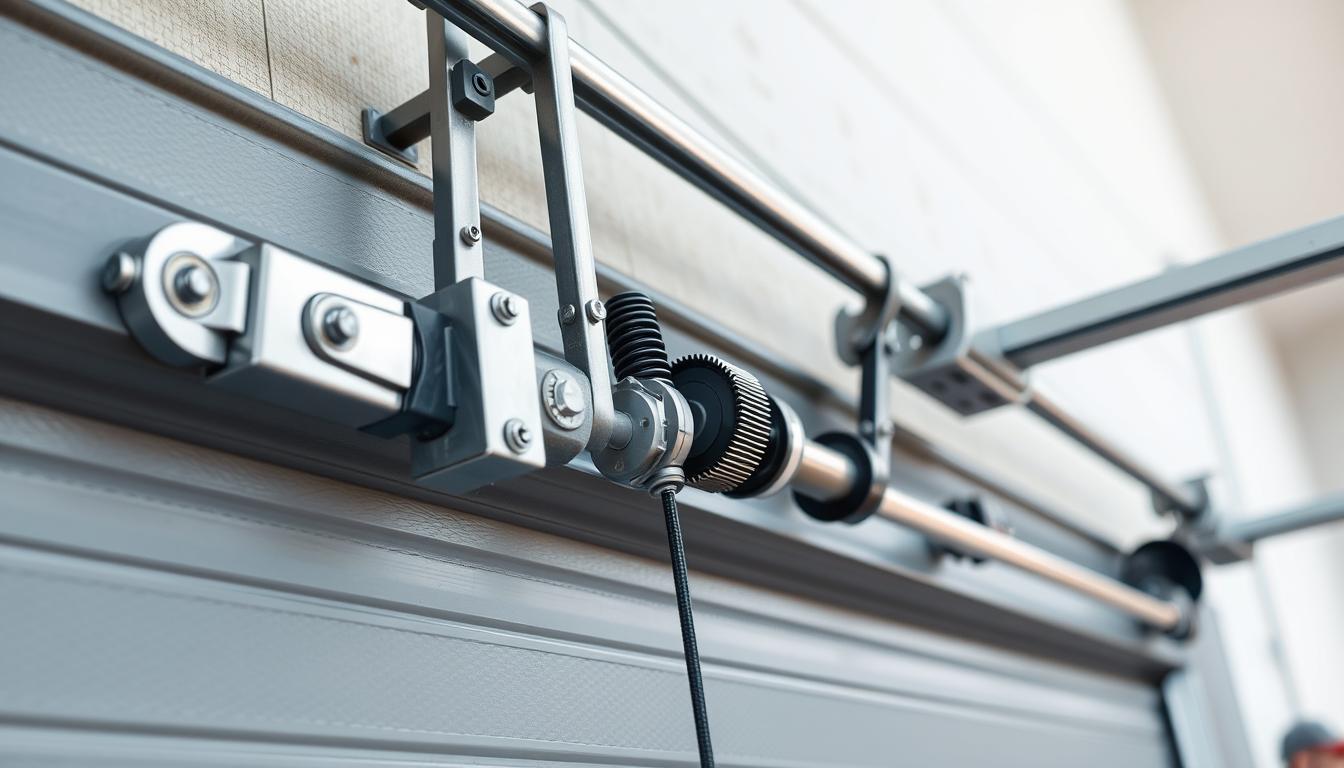
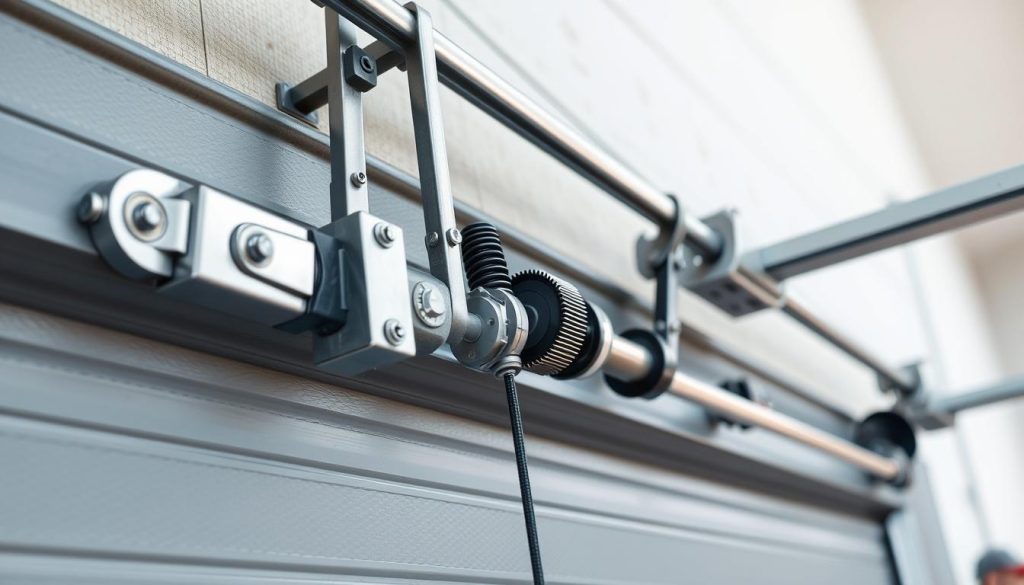
The main parts of a garage door are panels, springs, cables, tracks, and rollers. The panels are what you see. Springs and cables help lift the door, making it easy to move. Tracks and rollers keep the door moving smoothly.

garage door components
How Different Parts Work Together
Each part of a garage door works together for safety and ease. When you press the opener, springs and cables lift the door. Tracks and rollers guide it, keeping it smooth and straight.
Safety Features and Their Importance
Today’s garage doors have important safety features like auto-reverse mechanisms and safety sensors. These stop accidents, especially with kids or pets around. For example, if something blocks the door, it will go back up to avoid harm.
| Component | Function | Importance |
| Springs | Counterbalance the door’s weight | Essential for smooth operation |
| Cables | Assist springs in lifting the door | Critical for door movement |
| Safety Sensors | Detect obstructions in the door’s path | Vital for preventing accidents |
Essential Garage Door Parts and Their Functions
To keep your garage door working well, it’s key to know its main parts. The garage door has many important parts that work together. They make sure your home is safe and easy to access.
Springs, Cables, and Pulleys
The springs, cables, and pulleys are vital for your garage door’s operation. Garage door springs help balance the door’s weight, making it easier to open and close. There are two main types: torsion springs and extension springs.
Torsion vs. Extension Springs
Torsion springs are above the door and twist to store energy. They’re strong and used in heavier doors. Extension springs stretch to store energy and are for lighter doors.
| Spring Type | Location | Function |
| Torsion Springs | Above the garage door | Twist to store energy |
| Extension Springs | On either side of the garage door | Stretch to store energy |
Panels, Tracks, and Rollers
The garage door panels give the door its strength. The tracks guide the door, and rollers help it move smoothly. It’s important to keep the tracks and rollers well-lubricated.

garage door parts
Hardware and Fasteners
The hardware and fasteners keep the garage door together. Weather seals stop water and air leaks. Adding insulation can also make your garage more energy-efficient and quieter.
Weather Seals and Insulation
Weather seals, made of rubber or vinyl, are at the door’s bottom. Adding insulation to panels can improve energy use. This is especially helpful in very cold or hot climates.
Garage Door Openers: Types and Components
Garage door openers are key to modern garages, offering various options. The type you pick affects how well your garage works, how quiet it is, and how easy it is to use.
Chain Drive vs. Belt Drive vs. Screw Drive
There are three main types: chain drive, belt drive, and screw drive. Chain drive openers are tough and cheap but can be loud. Belt drive openers are quieter, perfect for homes with garages. Screw drive openers strike a balance, being reliable and not too loud.
Smart Openers and Modern Features
Today’s garage door openers come with cool features like smart technology and Wi-Fi connectivity. These smart openers let you control your garage from your phone. You can also get alerts and connect them to your smart home.
Wi-Fi Connectivity and Smartphone Control
Wi-Fi lets you control your garage from anywhere. It’s great for letting in guests or service people when you’re not home.
Remote Controls and Wall Consoles
Remote controls and wall consoles are also important. Remotes let you open your garage from afar. Wall consoles give you a fixed spot inside to control it.
Knowing about the different garage door openers helps you choose the best one. This makes your garage more useful and convenient.
Signs Your Garage Door Parts Need Attention
Knowing when your garage door parts need attention can prevent expensive fixes later. A garage door has many parts that move and can wear out over time.
Unusual Noises and Vibrations
If your garage door makes unusual noises or vibrates a lot, it’s a sign of trouble. Sounds can range from grinding to loud bangs. Vibration might make the door shake.
Slow Response or Uneven Movement
A slow or unevenly moving garage door is another warning sign. This could mean worn-out springs, misaligned tracks, or a failing opener.
Visual Indicators of Wear and Damage
Checking your garage door visually can tell you a lot. Look for signs of wear and damage.
Rust, Fraying, and Deformation
Rust on metal, fraying cables, or deformation in parts are warning signs. Rust weakens metal, fraying cables can break, and deformed parts can cause problems.
Fixing these issues quickly can stop more damage and keep your garage door working right. Regular checks can catch these problems early.
Broken Spring Repair: What You Need to Know
Fixing a broken garage door spring is more than just a quick fix. It’s about doing it safely and right. Garage door springs carry the door’s weight, so fixing or replacing them needs careful thought.
Types of Garage Door Springs
There are mainly two types of garage door springs: torsion and extension. Torsion springs sit above the door and twist to store energy. On the other hand, extension springs stretch out on either side to help the door move.
Signs of Spring Failure
Spotting spring failure early is key. Look out for:
- Unusual noises, like creaking or banging
- The door looking uneven or sagging
- Hard times opening or closing the door
Professional vs. DIY Spring Replacement
While DIY might save money, it’s risky due to the springs’ high tension. Professional technicians are trained and equipped for safe spring replacement.
Safety Considerations When Handling Springs
When working with garage door springs, safety comes first. Always:
- Release the spring’s tension before starting repairs
- Wear gloves and safety glasses
- Get professional help if unsure about anything
In summary, fixing a broken spring is a big job. Knowing about the springs, spotting failure signs, and focusing on safety helps. Whether you choose a pro or DIY, knowing what to do is crucial for a good fix.
Garage Door Opener Repair and Replacement
Fixing your garage door opener can be easy if you know what to look for. A broken opener can really mess up your day. But, knowing the usual problems and how to fix them can help a lot.
Troubleshooting Common Opener Issues
First, find out what’s wrong with your opener. Most problems are with the motor, circuit board, and sensors.
Motor, Circuit Board, and Sensor Problems
- A bad motor might make weird noises or not work at all.
- Issues with the circuit board can cause strange behavior or stop the system.
- Dirty or misaligned sensors can cause safety problems and make the opener not work right.
When to Repair vs. When to Replace
Should you fix or replace your opener? It depends on a few things. Like how old it is, what’s wrong, and how much fixing it costs. If it’s new and the problem is small, fixing it might save money. But, if it’s old or the problem is big, it might be cheaper to get a new one.
Latest Opener Technologies Worth Upgrading To
New garage door openers have cool features like smart technology, battery backup, and better safety. Getting a newer model can make your opener work better, be safer, and be more convenient. Some cool new tech includes:
- Wi-Fi for remote control and access.
- Advanced security with rolling code technology.
- Battery backup for when the power goes out.
Knowing about common opener problems and the newest tech can help you decide to fix or replace your opener. This way, your garage door will work well and safely.
Residential Garage Door Repair Services
Keeping a garage door in good shape is more than just fixing problems. It’s about making sure your home is safe and runs smoothly. That’s why residential garage door repair services are so important.
Common Household Garage Door Issues
Many homeowners face issues with their garage doors. These can include springs that wear out, tracks that get misaligned, and openers that don’t work right. These problems can make life harder and even put your home at risk.
- Worn-out springs and cables
- Misaligned or damaged tracks
- Faulty garage door openers
Maintenance Plans for Homeowners
To prevent sudden repairs and keep your garage door working well, maintenance plans are a good idea. These plans usually include regular checks, oiling moving parts, and making adjustments when needed.
With a maintenance plan, you can rest easy knowing your garage door is in top shape.
Cost Considerations for Residential Repairs
The cost of fixing a garage door at home can change a lot. It depends on the problem and what parts you need. It’s key for homeowners to know about the cost considerations for different repairs.
Insurance Coverage for Garage Door Damage
At times, damage to your garage door might be covered by your homeowner’s insurance. This is especially true if the damage comes from unexpected events like storms or accidents. It’s a good idea for homeowners to check their policies to see what’s included.
Commercial Garage Door Repair Solutions
Commercial garage doors are key for many businesses. They need strong repair solutions to keep operations running. Quick and effective repairs are vital for keeping things moving.
Heavy-Duty Commercial Door Components
Commercial garage doors use heavy-duty components to handle a lot of traffic. These parts include strong springs, durable cables, and tough panels. Knowing how these parts work helps spot problems early.
Business Impact of Garage Door Failures
A broken garage door can really hurt your business. It can cause lost productivity and money. It’s not just fixing the door; it’s about keeping your business running smoothly. Quick repairs are key to getting back on track.
Emergency Commercial Repair Services
When a garage door breaks, emergency repair services act fast. They help get your business running again quickly. These services are made for urgent repairs to keep your business going.
Preventative Maintenance Programs
To avoid emergency repairs, preventative maintenance programs are a good idea. These programs include regular checks and maintenance. They help find and fix small problems before they get big.
| Maintenance Task | Frequency | Benefit |
| Spring Inspection | Quarterly | Prevents sudden spring failure |
| Cable Lubrication | Bi-Annually | Reduces wear and tear on cables |
| Panel Inspection | Annually | Identifies potential damage early |
DIY Garage Door Maintenance Tips
Regular DIY maintenance can make your garage door last longer. By spending a little time each month, you can avoid expensive repairs. This ensures your garage door works smoothly.
Monthly Inspection Checklist
Begin with a visual check for wear or damage. Look at the springs, cables, rollers, and tracks. Make sure to tighten any loose hardware and replace any broken parts.
- Inspect springs for signs of wear or breakage.
- Check cables for fraying or damage.
- Examine rollers and tracks for wear or misalignment.
Lubrication and Cleaning Best Practices
Lubrication keeps your garage door running smoothly. Use a high-quality garage door lubricant on springs, rollers, and hinges. Don’t use WD-40 or other household lubricants as they attract dirt.
Recommended Products and Tools
For good lubrication, try silicone-based lubricants or white lithium grease. You’ll also need a soft cloth for cleaning and a ladder for high areas.
When to Call a Professional
While DIY maintenance helps, some issues need a pro. If you see big damage, unusual noises, or if your door is not balanced, call a professional.
“A well-maintained garage door is not just about aesthetics; it’s a matter of safety and security for your home and family.”
By following these DIY garage door maintenance tips, you can keep your door in good shape. It will operate safely and last longer.
Choosing a Reliable Garage Door Repair Company
There are many garage door repair companies out there. It’s important to know what to look for in a reliable service. A good repair company can fix your garage door quickly and well. This saves you time and money.
Credentials and Certifications to Look For
When looking for a garage door repair company, check their credentials and certifications. Look for companies that are licensed, insured, and certified by reputable organizations like the International Door Association or the Better Business Bureau. These certifications show they follow industry standards and best practices.
Reading Reviews and Getting Recommendations
Reading reviews and getting recommendations is also key. Check online review sites like Yelp or Google Reviews to see what others say. Also, ask friends, family, or neighbors for their opinions. Their experiences can give you a good idea of the company’s reliability and service quality.
Questions to Ask Before Hiring
Before hiring a garage door repair company, ask some questions. Find out their experience with your type of garage door, how quickly they respond, and their pricing. A reliable company will be clear about their costs and services.
Understanding Warranties and Guarantees
It’s also important to understand the warranties and guarantees offered. A reputable company should have a comprehensive warranty that covers parts and labor. This gives you peace of mind, knowing you’re protected if the repair doesn’t meet your expectations.
Local Garage Door Repair: Finding Service in Your Area
When your garage door breaks down, local technicians are there to help. They offer quick service and know your area well.
Benefits of Working with Local Technicians
Local garage door repair experts are quick and efficient. They know your area and can fix problems fast.
Response Times and Emergency Services
Local services are known for their fast response. They even offer emergency services when you need them most.
| Service Feature | Local Technicians | National Chains |
| Response Time | Typically within 1 hour | Often within 24 hours |
| Emergency Services | Available 24/7 | Limited hours |
| Personalized Service | Highly personalized | Less personalized |
Building a Relationship with Your Repair Provider
Choosing local technicians means you can build a strong relationship. They offer better maintenance tips and custom repair services.
What to Expect During a Service Call
During a visit, the technician will find the problem, give a repair quote, and fix it.
Conclusion: Maintaining Your Garage Door for Longevity and Safety
Regular garage door maintenance is key for its long life and safety. Knowing your garage door’s parts and how they work helps spot problems early. This way, you can fix them before they get worse.
Keeping your garage door in good shape means regular checks, oiling, and cleaning. This stops wear and tear, lowering the chance of accidents. A well-kept garage door works smoothly, making life easier and safer.
By taking care of your garage door parts, you make it last longer. This saves money on repairs, keeps everyone safe, and keeps your garage door working well. It’s all about keeping your garage door safe and in good condition.